Fashion and apparel sit at the top of the EU’s Digital Product Passport priority list, and two things about that make the category different from almost every other product group: the working plan names textiles as the first sector expected to get a delegated act after iron and steel, and a separate rule, the ban on destroying unsold goods, already applies to fashion regardless of when that act arrives. This guide covers both, and what a fashion brand’s data model needs to be ready for either.
Where textiles actually stand
The Ecodesign for Sustainable Products Regulation (ESPR), Regulation (EU) 2024/1781, works product group by product group. The Commission’s first ESPR working plan, adopted 16 April 2025, names textiles and apparel as a top priority, with a delegated act expected around 2027. That date is the plan’s target, not a guarantee, and it can move; the DPP Product Category Lookup tracks the current status with sources. Footwear has generally been treated as a related but separate question pending further study.
The rule that already applies: the unsold-goods destruction ban
Separately from the passport timeline, the ESPR bans the destruction of unsold apparel, clothing accessories and footwear. That ban reaches large companies from 19 July 2026, extends to medium-sized companies in 2030, and does not apply to micro and small enterprises. If your fashion brand is a large company, this is already a live compliance question, independent of when a passport delegated act for textiles is adopted. Review returns and overstock handling now, since the operational change (a new outlet for unsold stock, or a redesign of markdown strategy) takes longer to implement than a data project.
The data a textile passport is likely to need
| Data | What it covers |
|---|---|
| Fibre composition | Percentage by fibre type, at style and colour level, not just the garment as a whole |
| Recycled content | Share of recycled material by fibre, with a source and verification |
| Durability | Test method and result for wear, wash and colourfastness where claims are made |
| Care and repair information | Washing, drying and repair instructions, linked to the physical care label |
| Substances of concern | Presence and concentration of restricted substances, referencing the applicable list |
| Supplier and site data | Manufacturing site and, where required, tier-two or tier-three supplier data |
This list follows the direction of the Annex I parameters explained in the ESPR Annex I guide , not a confirmed textiles-specific field list, since the delegated act has not been adopted. Building toward it now avoids starting from zero once it is.
Why fashion’s operating model makes this harder than other categories
- SKU volume and seasonal cycles compress timelines. A passport process that takes weeks per product does not survive a seasonal launch calendar.
- Variant depth multiplies the work. Colour, size and sometimes fabric batch variants each need their own data, not one record shared across a style.
- Supplier networks are wide and change often. Fibre composition and substance data usually originate at the mill or component supplier, several tiers from the brand.
- Care and repair content needs to match the physical label. A digital record that disagrees with the sewn-in care label creates a consumer-facing inconsistency.
Where to start
- Audit fibre composition data at style and colour level, not just at the product-family level, since a passport will need it at the level products are actually sold.
- Standardise supplier submission templates for composition, recycled content and substance data; see how to collect supplier data for DPP readiness .
- Design reusable attribute blocks for fibres, finishes, origin claims and care symbols that can be shared across product families rather than rebuilt per style.
- Review unsold-stock handling now against the 2026 and 2030 destruction-ban dates for your company size.
- Track the delegated act with the DPP Product Category Lookup and revisit your data model when it is published.
For the full six-phase rollout sequence, see the 30-step ESPR compliance roadmap , and for how textiles compare with other priority groups, which products need a Digital Product Passport, by product group .
See PIM for fashion and apparel brands for how this fits into a broader product data operation.
Frequently asked questions
When will fashion brands need a Digital Product Passport?
There is no confirmed date. Textiles are a top priority in the Commission’s ESPR working plan, with a delegated act expected around 2027, but this timing is not final and has already shifted once.
What is the unsold goods destruction ban and does it apply now?
The ESPR bans destroying unsold apparel, clothing accessories and footwear. It applies to large companies from 19 July 2026 and to medium-sized companies from 2030; micro and small enterprises are exempt. This applies regardless of the passport timeline.
What data should fashion brands start collecting now?
Fibre composition at style and colour level, recycled content with verification, durability test results, care and repair information, substances of concern, and supplier and site data.
Is footwear covered by the same textiles rules?
Footwear has generally been treated as a related but separate question pending further study, so check the current status rather than assuming it follows the same timeline as apparel.
Why is fashion data harder to manage than other categories?
High SKU volumes, seasonal launch cycles, deep colour and size variant structures, and wide, frequently changing supplier networks make consistent data collection more operationally demanding than for simpler product categories.
Where can I check the current status of textiles under the ESPR?
The DPP Product Category Lookup tracks the status, expected timing and sources for textiles and other product groups, with a stated last-reviewed date.

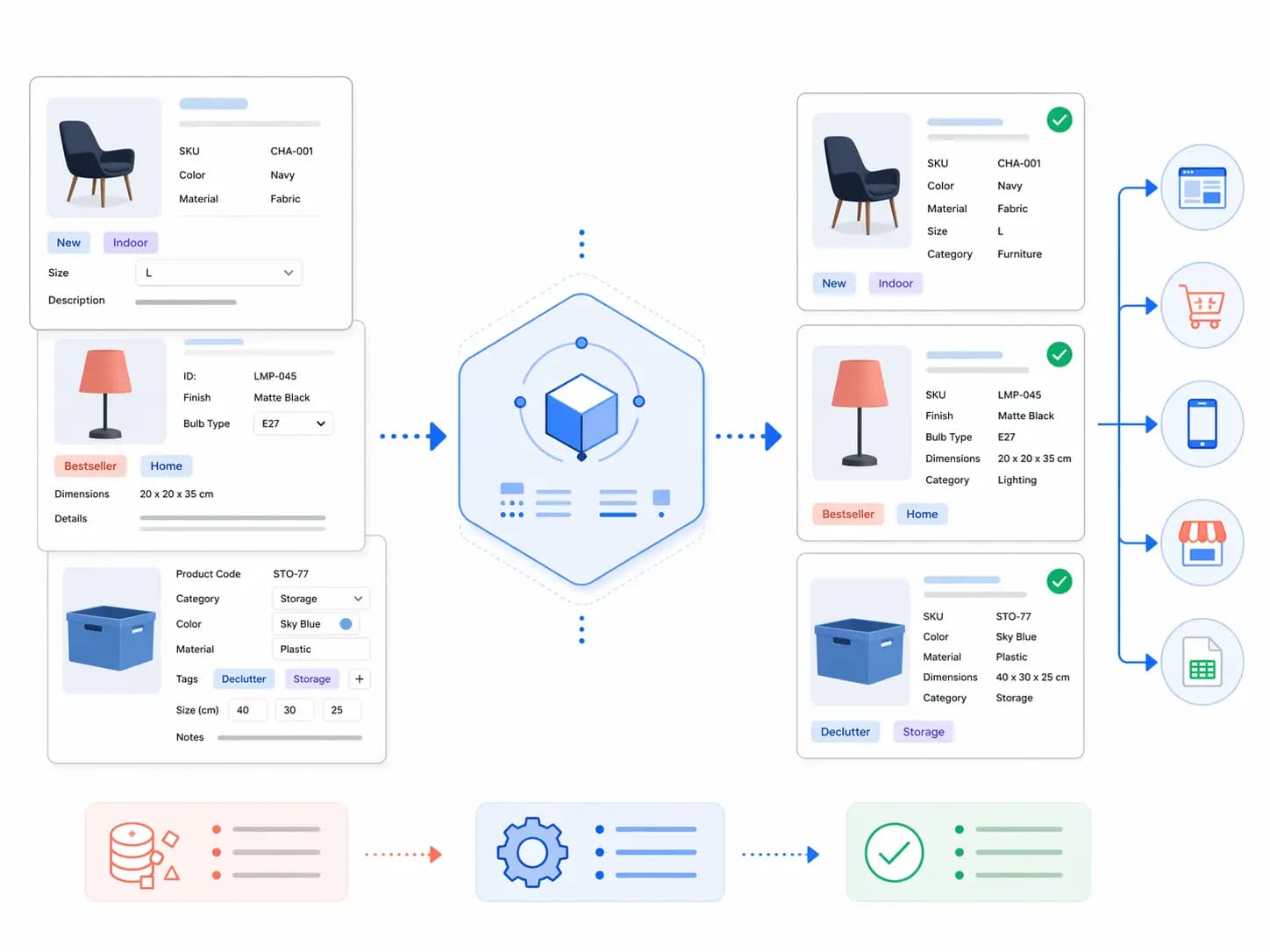
Digital Product Passport data workflow connecting products, materials, suppliers and compliance