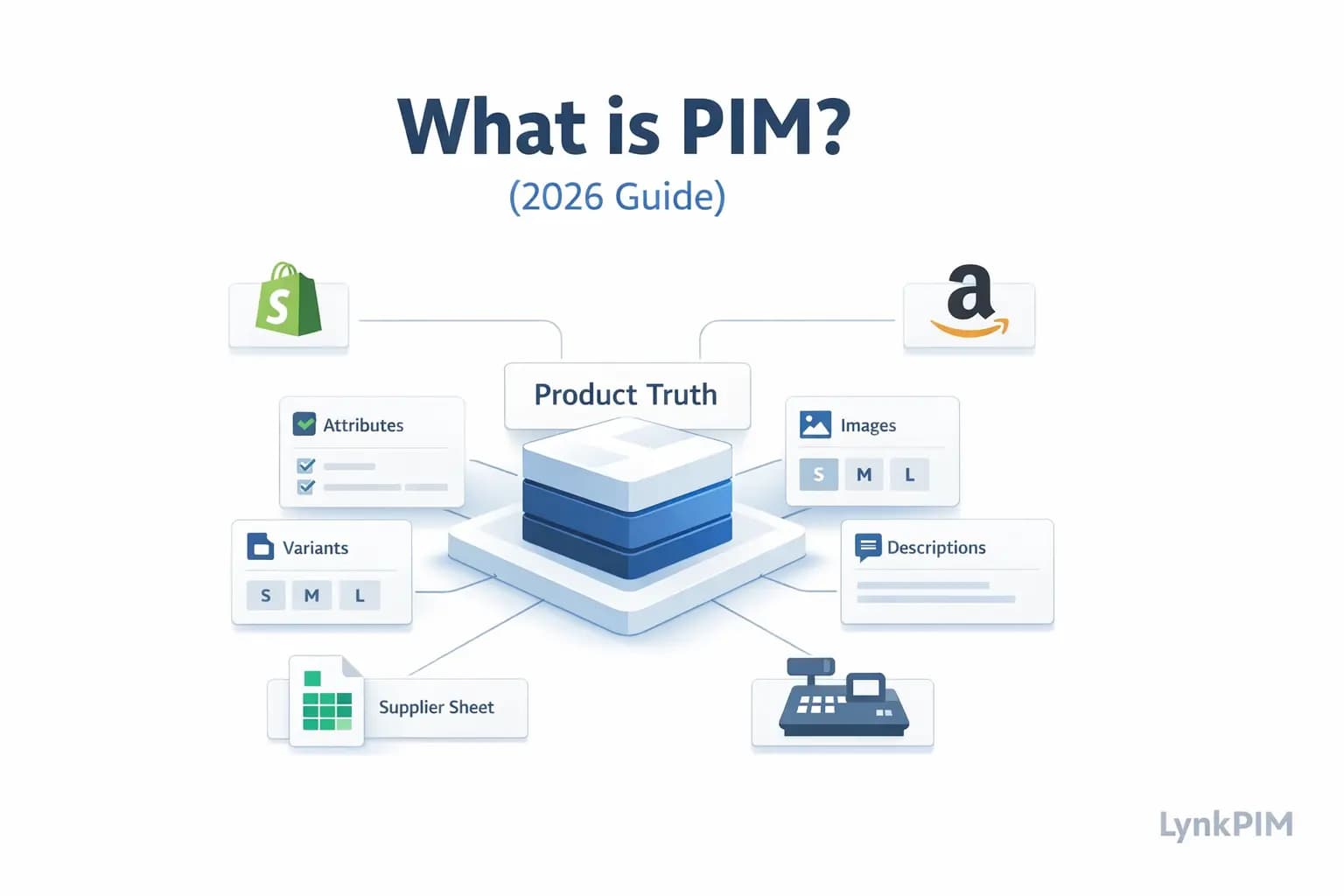
Was ist PIM: Ein zentraler Produkt-Wahrheits-Hub, verbunden mit Shopify, Amazon, Google Shopping, POS und Lieferanten-Sheets
Wenn du mehr als nur eine Handvoll Produkte verkaufst, hast du wahrscheinlich schon gemerkt, wie sich Produktdaten-Chaos langsam einschleicht. Meist sieht man nicht „den einen großen Fehler“, sondern hundert kleine: das falsche Bild bei einer Variante, ein fehlendes Attribut im Google-Feed, eine Marktplatz-Ablehnung, weil ein Pflichtfeld leer war, oder ein Support-Ticket, das vermeidbar gewesen wäre, wenn die Spezifikationen korrekt gewesen wären.
TL;DR: Die meisten Teams starten mit Tabellen, weil Tabellen schnell sind. Das Problem ist, was danach passiert: Die Tabelle wird zu deinem Workflow, deinem Freigabesystem, deinem Audit-Log, deiner „Single Source of Truth“ – und irgendwann sogar zu deiner Integrationsschicht.
Die meisten Teams starten mit Tabellen, weil Tabellen schnell sind. Das Problem ist, was danach passiert: Die Tabelle wird zu deinem Workflow, deinem Freigabesystem, deinem Audit-Log, deiner „Single Source of Truth“ – und irgendwann sogar zu deiner Integrationsschicht. Und genau dann wird alles fragil.
Dieser Guide erklärt, was ein PIM ist, was es nicht ist, wo es im Produktdatenfluss sitzt – und wie du erkennst, ob du an dem Punkt bist, an dem ein PIM dir Zeit spart (und die langweiligen Fehler verhindert, die Geld kosten).
Kurzdefinition: Ein PIM (Product Information Management) ist das System, in dem du Produktinformationen zentralisierst, bereinigst, steuerst (Governance) und veröffentlichst – Titel, Beschreibungen, Attribute, Varianten und Medien – damit jedes Team und jeder Kanal dieselbe Produkt-Wahrheit verwendet.
TL;DR (die praktische Version)
- PIM ist der Ort, an dem Produkt-Content lebt: Attribute, Varianten, Bilder, Dokumente und Kanal-Regeln.
- Du brauchst PIM typischerweise dann, wenn Menschen und Kanäle wachsen – nicht nur die SKU-Anzahl.
- PIM gibt dir einen autoritativen Produktdatensatz und hilft, die richtige Version nach Shopify, Marktplätzen, Feeds und internen Systemen zu pushen.
- Der echte Gewinn ist Governance: Freigaben, Validierungen, Rollen und Change-Tracking – damit Fehler nicht ständig wiederkehren.
- Wenn deine „Master-Tabelle“ dauernd babysitten braucht, zahlst du längst die PIM-Steuer – nur unsichtbar.
Was ist PIM (Product Information Management)?
PIM (Product Information Management) ist das System, das die verkaufbare Definition deiner Produkte verwaltet. Nicht deine Bestellungen. Nicht deine Lagerbestände. Sondern das, was Kund:innen tatsächlich sehen und worauf sie sich verlassen: Produkttitel, Beschreibungen, Spezifikationen, Attribute, Variantendetails, Bilder, Videos, Anleitungen, Compliance-Hinweise und kanal-spezifische Formatierung.
So kannst du dir das am einfachsten vorstellen: In deinem Business sind Produktdaten bereits über Tools verteilt. Ein ERP enthält Artikelcodes und Kosten. Shopify hält Storefront-Content. Ein DAM hält Medien. Das Problem: Keines dieser Tools ist als „Kontrollraum“ für Produktdaten gebaut. Ein PIM ist genau das.
Die Anker-Definition (intern verwendbar)
Ein PIM ist ein zentraler Hub, um saubere, strukturierte Produktinformationen zu erstellen und zu pflegen – und sie in der richtigen Form an jeden Verkaufskanal zu verteilen.
Mehr ist es nicht. Alles andere (Workflows, Validierungen, Berechtigungen, Integrationen) existiert, weil „sauber und strukturiert“ ab einer gewissen Größe nicht zufällig passiert.
Was PIM nicht ist (damit du nicht das falsche Tool kaufst)
PIM überschneidet sich mit anderen Systemen – deshalb werden Begriffe gern vermischt. Klare Grenzen helfen:
- PIM ist nicht ERP/WMS. ERP- und Warehouse-Systeme tracken Bestand, Einkauf, Finanzen und Logistik. Ein PIM kann Supplier-Codes und Stock-Status referenzieren, ist aber nicht dein operatives Ledger.
- PIM ist nicht CMS. Ein CMS verwaltet Seiten und Artikel. Ein PIM verwaltet strukturierte Produktdaten und die Regeln, die diese Daten konsistent machen.
- PIM ist nicht „nur ein Marktplatz-Uploader“. Marktplatz-Tools sind hilfreich, setzen aber oft voraus, dass deine Produktdaten bereits sauber sind. Ein PIM macht die Daten zuerst sauber.
Wenn dein Hauptproblem „Wir können unseren Spezifikationen und Attributen nicht trauen“ ist, ist das ein PIM-Problem. Wenn dein Problem „Wir trauen unseren Beständen nicht“, ist das etwas anderes.
Welche Probleme löst ein PIM?
PIM wird oft als „Zentralisierung von Produktdaten“ verkauft. Stimmt – ist aber unvollständig. Das eigentliche operative Problem lautet: Produktdaten ändern sich ständig, und mehrere Personen fassen sie an. Ohne Struktur entstehen Inkonsistenzen, Verzögerungen und wiederholte Aufräumarbeit.
Wo PIM im E-Commerce-Stack sitzt: ERP/WMS und DAM speisen PIM, das an Shopify, Amazon, Google-Feed und POS veröffentlicht
Hier sind die häufigsten Probleme, sobald ein Shop „echte“ Skalierung erreicht (mehr SKUs, mehr Varianten, mehr Kanäle, mehr Teams):
| Problem | So sieht es in der Praxis aus | Wie PIM es löst |
|---|---|---|
| Mehrere Versionen der „Wahrheit“ | Merchandising hat ein Sheet, Marketing ein anderes, Ops hat Lieferanten-Files. Alle sind „irgendwie richtig“ – Listings driften. | Ein autoritativer Datensatz mit Ownership + Freigaben. |
| Attribute sind nicht konsistent | Filter funktionieren schlecht. Ads performen schlechter, weil Feeds unvollständig sind. Support bekommt Basisfragen. | Attribut-Governance (kontrollierte Werte), Validierungen, Kategorie-Templates. |
| Varianten sind schmerzhaft | Größe/Farbe/Material explodieren. Bilder passen nicht zur Variante. Barcodes landen in der falschen Zeile. | Sauberes Produkt/Varianten-Modell mit Vererbung und Varianten-Overrides. |
| Kanal-Anforderungen ändern sich | Ein Marktplatz verlangt plötzlich ein neues Pflichtfeld. Ihr müsst Tausende Produkte nachpflegen. | Kanal-Regeln + Vollständigkeitschecks, damit „was fehlt?“ sofort sichtbar ist. |
| Launches dauern zu lange | Neue Kollektionen hängen in Endlosschleifen, weil es keinen klaren Workflow gibt. | Workflow-States (Entwurf → Review → Freigabe) + rollenbasierte Rechte. |
Praxisbeispiele (wie es je nach Branche aussieht)
PIM wird greifbarer, wenn du nicht über „Produktdaten“ nachdenkst, sondern über die Realität deines Katalogs. Unterschiedliche Branchen „brechen“ an unterschiedlichen Stellen.
Beispiel 1: Fashion (Varianten, Größen, Attribute, Bilder)
Fashion-Teams haben nicht nur „zu viele Produkte“. Sie haben zu viele Varianten. Ein Shirt wird zu 12 Varianten. Multipliziere das über Kollektionen – und plötzlich ist dein „kleiner Katalog“ ein 20k+ SKU-Monster.
Typische Tabellen-Probleme:
- Farbbenennung driftet („Navy“, „Navy Blue“, „Dark Blue“).
- Größensysteme unterscheiden sich je Markt (UK/US/EU) und Teams patchen manuell.
- Variantenbilder passen nicht (die „Rot“-Variante zeigt „Blau“-Fotos).
- Retouren steigen, weil die Produktseite nicht dem entspricht, was ankommt.
Was PIM ändert: Du modellierst ein Parent-Produkt (z. B. „Leinenhemd“) mit gemeinsamen Attributen. Varianten erben das meiste, können aber überschreiben, was wirklich varianten-spezifisch ist (Barcodes, Bilder, bestimmte Attribute). Und du erzwingst kontrollierte Werte, damit Teams nicht ständig neue Schreibweisen für dasselbe erfinden.
Beispiel 2: Elektronik (Specs, Compliance, Kompatibilität)
Elektronik scheitert, wenn Specs nicht strukturiert sind. Ein fehlendes Feld (Anschluss-Typ, Watt, Kompatibilität, Spannung) kann Retouren und „funktioniert nicht“-Tickets auslösen – obwohl das Produkt okay ist.
PIM hilft, indem es Spec-Templates pro Kategorie standardisiert (Ladegeräte, Kopfhörer, Smart-Home), Validierungen ergänzt (du kannst ohne Pflichtfelder nicht veröffentlichen) und Dokumente (Anleitungen, Zertifikate) sauber mit SKUs verknüpft.
Beispiel 3: Home & Living (Bundles, Maße, Materialien)
Hier gibt es häufig Probleme mit Maßen, Oberflächen und Sets. Jemand trägt „120“ ohne Einheit ein. Eine andere Person nutzt Zoll. Wieder jemand nutzt cm. Jetzt werden Filter, Versand-Schätzungen und Erwartungen unsauber.
Ein PIM bringt Struktur: standardisierte Felder mit Einheiten-Handling, kontrollierte Werte für Materialien/Finishes und Produkt-Beziehungen (Bundles/Sets), ohne denselben Content in Dutzende Zeilen zu kopieren.
PIM im Produktdatenfluss (vom Lieferanten bis zum Storefront)
Die meisten Teams haben bereits einen Produktdatenfluss – er ist nur informell und fragil. Ein PIM macht ihn wiederholbar.
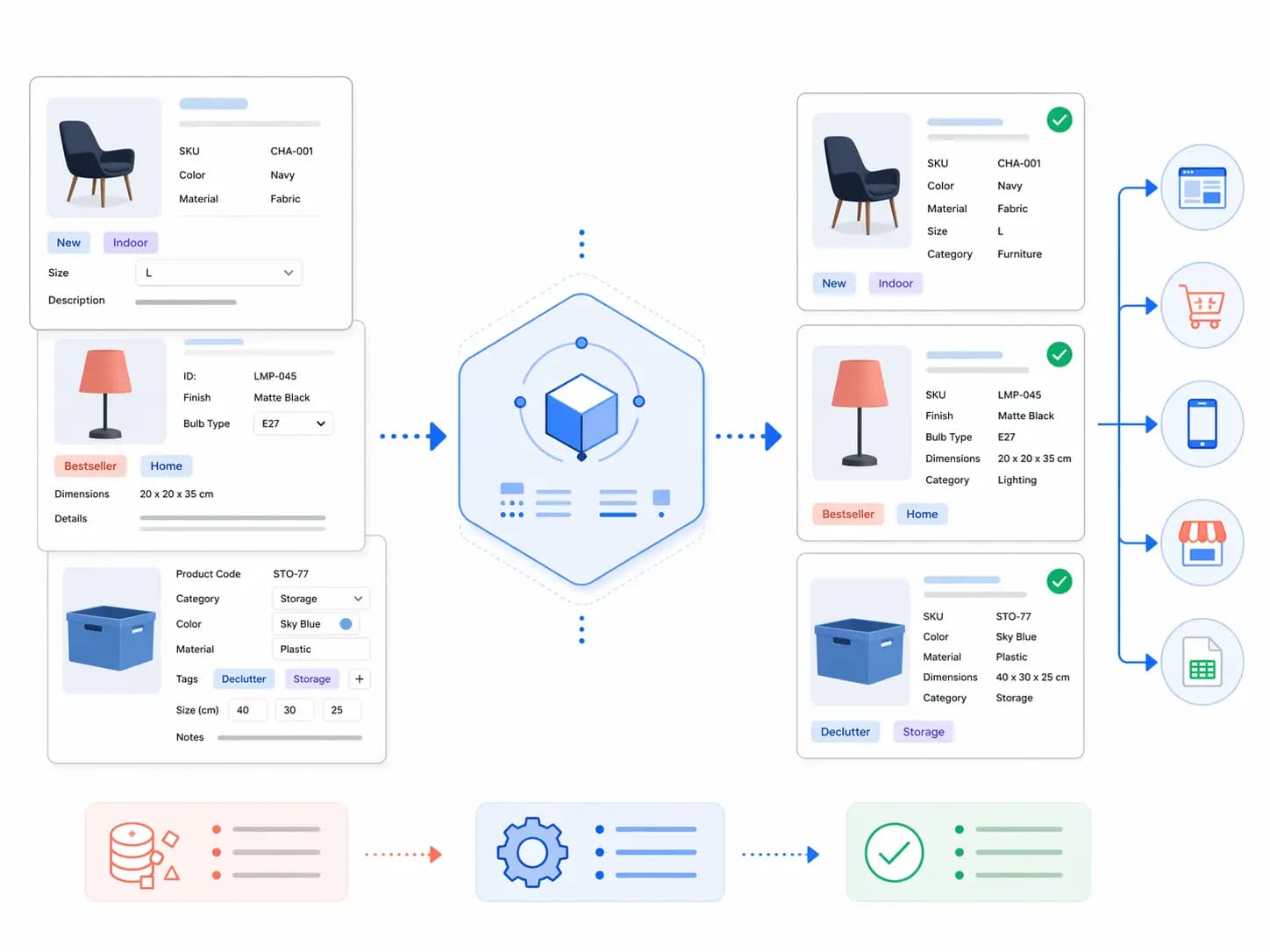
- Intake → Lieferanten-Sheets, Hersteller-Feeds, interne SKU-Listen, Bilder, Dokumente
- Normalize → Felder mappen, Formate bereinigen, Einheiten standardisieren, Naming angleichen
- Enrich → Marketing-Copy, SEO-Felder, Bulletpoints, Lifestyle-Media hinzufügen
- Approve → Merchandising + Marketing + (falls nötig) Compliance
- Syndicate → Shopify, Marktplätze, Paid-Feeds, POS, Partner-Kataloge
Der große Unterschied: Statt dass jeder Launch ein einmaliger „Feuerwehr-Einsatz“ ist, baust du einen wiederholbaren Pfad von „rohen Lieferantendaten“ zu „kanal-fertigen Listings“.
PIM-Workflow: Intake, Normalisierung, Enrichment, Freigabe und Syndication
Was „Single Source of Truth“ wirklich bedeutet (praktisch)
„Single Source of Truth“ sollte kein Slogan sein. In Product Operations ist es eine Entscheidung: Ein System besitzt Produkt-Content und Struktur, und alles andere liest daraus.
So sieht das im Alltag aus:
- Ihr diskutiert nicht mehr, welche Datei korrekt ist. Es gibt einen kanonischen Datensatz.
- Ihr seht genau, wer was geändert hat (und könnt Fehler ohne Panik rückgängig machen).
- Ihr beantwortet „Was fehlt?“ ohne Tausende Zeilen manuell zu prüfen.
Anzeichen, dass du Tabellen überlebt hast
Tabellen sind nicht der Feind. Sie sind nur nicht für Governance gebaut. Wenn Teams Tabellen als Freigabe-, Integrations- und Publishing-Workflow nutzen, zeigen sich die Risse:
- Ihr habt mehrere „Master-Sheets“ – und trotzdem fragt jemand, welches gilt.
- Kanal-Templates vervielfachen sich (Amazon-Sheet, Google-Sheet, Shopify-Sheet…).
- Varianten-Management fühlt sich an wie manuelle Chirurgie.
- Neue Produktlaunches brauchen kurz vor Publish immer einen Cleanup-Sprint.
- Teams überschreiben sich gegenseitig.
- Vollständigkeit ist nicht zuverlässig messbar.
- Produktbilder liegen in chaotischen Ordnern ohne konsistentes Naming.
- Marktplatz-Ablehnungen passieren oft wegen fehlender Pflichtfelder.
- Support-Tickets fragen wiederholt Basics.
- „Update einfach das Sheet“ ist euer Operating Model geworden.
Wenn das nach euch klingt: Ihr zahlt bereits jede Woche für Produktdaten-Chaos – ihr nennt es nur noch nicht „Systemkosten“. Ein PIM macht diese Kosten sichtbar und gibt euch ein System, um sie Schritt für Schritt zu reduzieren.
Vergleich: Tabellen vs PIM für Governance, Workflows und Skalierung
Zentrale PIM-Konzepte, die du verstehen musst
SKU vs Produkt vs Variante
Viel Katalog-Verwirrung startet genau hier. Ein Produkt ist das Konzept (z. B. „Leinenhemd“). Eine Variante ist die verkaufbare Ausprägung (Blau, Größe M). Eine SKU ist deine interne Kennung (oft an eine Variante gebunden). Ein PIM hilft dir, das sauber zu modellieren – ohne alles in eine flache Tabellenzeile zu pressen.
Attribute, Taxonomie, Kategorien
Attribute sind Eigenschaften (Material, Größe, Watt). Taxonomie ist deine Struktur (Kategorien/Unterkategorien), die entscheidet, welche Attribute wichtig sind. Gute Taxonomie verhindert Datenmüll, weil sie Erwartungen setzt: Ladegeräte brauchen Watt; Matratzen brauchen Maße; Kosmetik braucht Inhaltsstoffe.
Vollständigkeits-Score (einfach erklärt)
Ein Vollständigkeits-Score beantwortet „Ist dieses Produkt publish-ready?“ ohne Raten. Er misst, ob Pflichtfelder, Assets und Kanal-Regeln erfüllt sind. Es geht nicht um Perfektion – sondern um operative Klarheit.
Wer nutzt PIM – und worauf kommt es an?
PIM funktioniert nur, wenn es zu echten Team-Workflows passt. Typischerweise interessieren sich die Gruppen für Folgendes:
| Team | Bedarf | Beispiel-Felder |
|---|---|---|
| Marketing | Konsistentes Storytelling | Titel, Beschreibungen, Bullets, Lifestyle-Bilder, Brand-Tone-Notes |
| E-Commerce | Kanal-fertige Daten & saubere Filter | Kategorien, SEO-Felder, GTIN, Feed-Felder, facettierte Attribute |
| Ops | Lieferanten-Alignment, weniger Überraschungen | Supplier-SKU, Packaging, Einheiten, interne Notizen, Lead-Time-Hints |
| Merchandising | Taxonomie + Sortiment-Struktur | Collections, Produktfamilien, Bundles, Saison-Tags |
| Support | Weniger vermeidbare Tickets | Kompatibilitäts-Hinweise, Manuals, FAQs, Troubleshooting-Felder |
| IT | Zuverlässige Integrationen & Governance | APIs, Validierungsregeln, RBAC, Audit-Logs, Sync-Schedules |
Wichtige PIM-Features 2026 (pragmatisch)
Feature-Listen sind leicht zu verkaufen und schwer zu nutzen. Diese Punkte machen in der Praxis den Unterschied, sobald ihr im Betrieb seid:
- Import & Mapping: Lieferantendaten reinholen, ohne Wochen manuell aufzuräumen.
- Attribut-Governance: kontrollierte Werte, kategorie-spezifische Templates, Validierungen.
- Workflow-Freigaben: Entwurf → Review → Freigabe (mit klarer Ownership).
- Kanal-Exports: pro Kanal die richtige Datenform ausgeben/pushen.
- Validierungsregeln: fehlende Pflichtfelder und inkonsistente Einheiten vor Publish abfangen.
- RBAC: wer darf was editieren (Schutz für High-Risk-Felder).
- Audit-Logs: was wurde wann und von wem geändert.
- Integrationen: Shopify, Marktplätze, Feeds, DAM, Übersetzungs-Tools, ERP-Referenzen.
Kaufen vs. selbst bauen (wie du entscheidest)
Die Frage kommt meist, wenn der Schmerz schon da ist. Es hängt davon ab, wie einzigartig eure Katalog-Anforderungen sind – und ob ihr ein langfristiges Plattform-Projekt besitzen wollt.
PIM-Software kaufen ist meistens richtig, wenn …
- ihr Ergebnisse dieses Quartal wollt, nicht nächstes Jahr.
- ihr Workflows, Validierungen, Rollen und Syndication braucht, ohne alles von Null zu bauen.
- ihr nicht wollt, dass Produktdaten-„Plumbing“ zum internen Engineering-Projekt wird.
Selbst bauen kann Sinn machen, wenn …
- eure Katalog-Struktur wirklich ungewöhnlich ist (komplexe Bundles, Konfiguratoren, strikte Compliance).
- ihr ein dediziertes Team habt, das das langfristig besitzt.
- ihr comfortable seid, es als Kern-Plattform zu betreiben.
Häufige Falle: Taxonomie-Arbeit wird unterschätzt. Tools „fixen“ Taxonomie nicht. Teams tun das. Ein PIM macht sie nur durchsetzbar, sobald ihr sie definiert habt.
Implementierungs-Ansatz (realistisch & kurz)
Ein guter Rollout ist gestuft. Das Ziel ist nicht, jedes Feld perfekt zu machen – sondern Publishing vorhersehbar zu machen und Fehler zu reduzieren.
- Phase 1: saubere Taxonomie + minimale Attribute für eure Kernkategorien.
- Phase 2: Workflows + Rollen, damit Änderungen nicht überschrieben werden und Freigaben sichtbar sind.
- Phase 3: Kanal-Syndication + Automatisierung (Feeds, Marktplätze, Supplier-Intake).
PIM Readiness-Checkliste (Google Sheet) (Lead Magnet CTA)
PIM Readiness-Checkliste (Google Sheet) — hier herunterladen
Was du bekommst:
- eine schnelle Scorecard, um zu prüfen, ob ihr Tabellen überlebt habt
- eine Requirements-Checkliste pro Team (Marketing, E-Com, Ops, IT)
- ein einfaches „Must-have vs. Nice-to-have“ Priorisierungs-Worksheet
Fazit
PIM ist kein „Fancy Tool“, das man kauft, weil es modern klingt. Es ist eine praktische Antwort auf ein praktisches Problem: Produktdaten werden komplex, und Tabellen können Governance nicht gut abbilden.
Wenn ihr bereits Zeit damit verbringt, fehlende Attribute zu jagen, Varianten-Probleme zu fixen oder Kanal-Templates neu zu bauen, bezahlt ihr jede Woche für Produktdaten-Chaos. Ein PIM macht diese Kosten sichtbar – und gibt euch ein System, um sie über Zeit zu reduzieren.
FAQs
1) Was ist PIM im E-Commerce?
PIM ist ein System, das Produktinformationen (Attribute, Beschreibungen, Bilder, Varianten) zentralisiert und hilft, konsistente, kanal-fertige Listings über Storefronts, Marktplätze und Feeds zu veröffentlichen.
2) Ist PIM dasselbe wie Product Data Management?
PIM ist eine Form von Product Data Management mit Fokus auf Commerce-Content und Syndication. „Product Data Management“ kann auch Engineering-PDM-Tools aus der Fertigung meinen – das ist eine andere Kategorie.
3) Brauche ich PIM, wenn ich nur auf Shopify verkaufe?
Nicht immer. Aber wenn du viele Varianten hast, häufig launchst, mehrere Contributors hast oder Feed-Anforderungen (Google/Meta) erfüllen musst, kann ein PIM auch bei nur einem Storefront Fehler reduzieren und Publishing beschleunigen.
4) Worin unterscheidet sich PIM von ERP?
ERP verwaltet Bestand, Einkauf, Finanzen und operative Prozesse. PIM verwaltet Produkt-Content und strukturierte Attribute, die Produktseiten, Filter und kanal-spezifische Anforderungen antreiben.
5) Wie lange dauert eine PIM-Implementierung?
Ein pragmatischer Rollout (Taxonomie + Kernattribute + Workflow) dauert oft einige Wochen bis wenige Monate – abhängig von Kataloggröße, Varianten-Komplexität und davon, wie „messy“ die vorhandenen Daten sind.
6) Was sollten wir zuerst in ein PIM migrieren?
Starte mit Taxonomie, Attribut-Sets für die Top-Kategorien und den Feldern, die Conversion und Kanal-Freigaben beeinflussen: Titel, Bullets, wichtigste Specs, Bilder sowie Identifikatoren wie GTIN/MPN.
7) Warum scheitern PIM-Projekte?
Meist, weil Ownership unklar ist. Wenn niemand Taxonomie, Attribut-Governance und Freigaben besitzt, wird das PIM zur nächsten Ablage. Starte mit Rollen und Regeln – nicht nur mit Migration.
Weiterlesen

By Binu Mathew
CEO @ itmarkerz technologiesBinu Mathew is the CEO of itmarkerz technologies and founder of LynkPIM — a modern product information management platform built for growing e-commerce brands. He has spent years working at the intersection of product data, digital commerce, and catalog operations, helping teams eliminate data silos, enforce quality standards, and publish accurate product content at scale. His work spans PIM strategy, marketplace syndication, and Digital Product Passport compliance.
Use These PIM Tools Next
- Use the PIM Readiness Assessment to Benchmark Your Team
- Check Catalog Health Score Before Expanding Channels
- Audit Required Product Fields with the Completeness Checker
- Validate GTIN, UPC, and EAN Codes Before Publishing
- Assess Team Capability Gaps Before Process Changes
- Evaluate Data Governance Maturity for Scaled Catalog Operations
Build Your Product Data Roadmap
Move from theory to execution with free tools and a practical PIM implementation path.