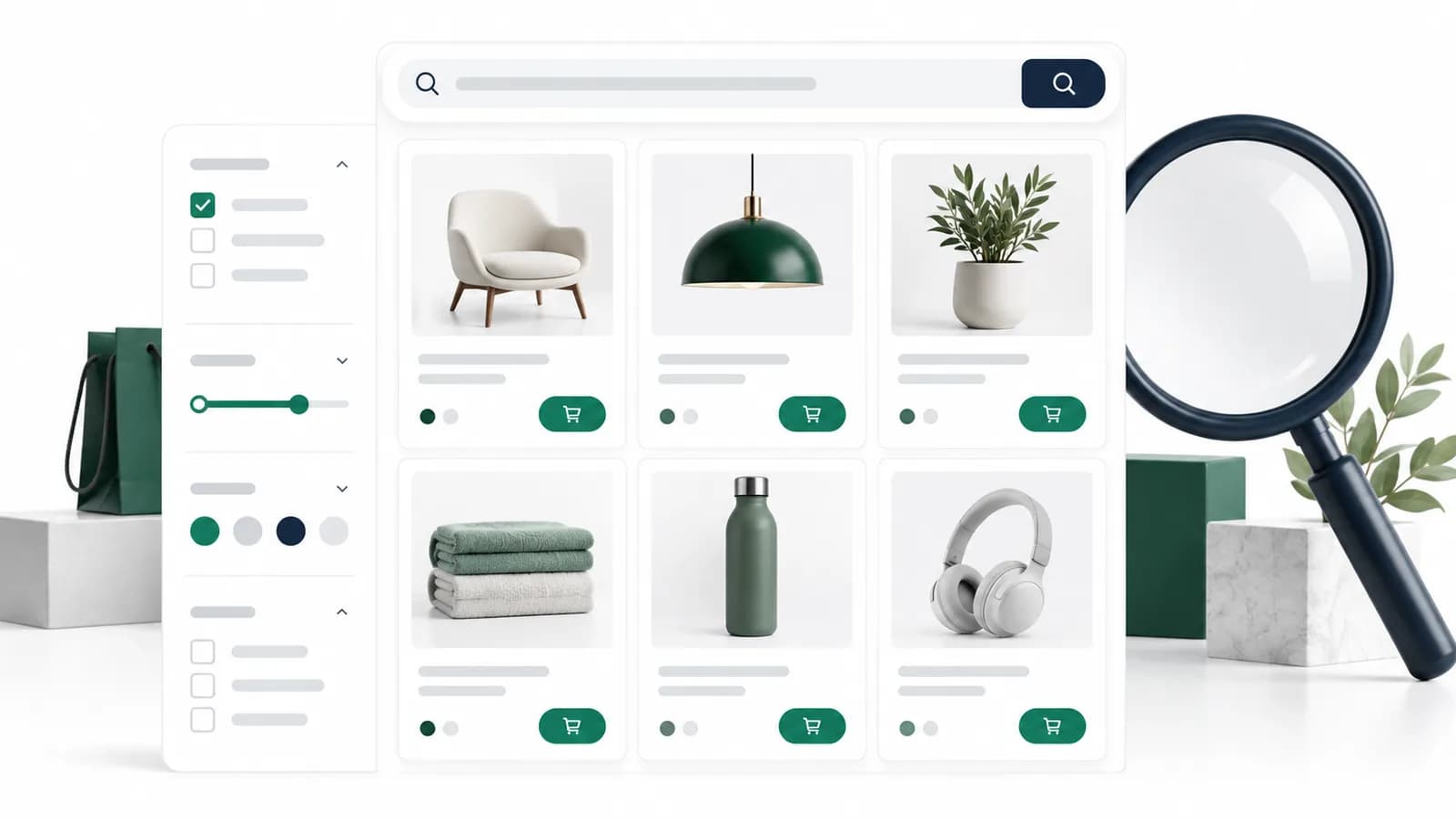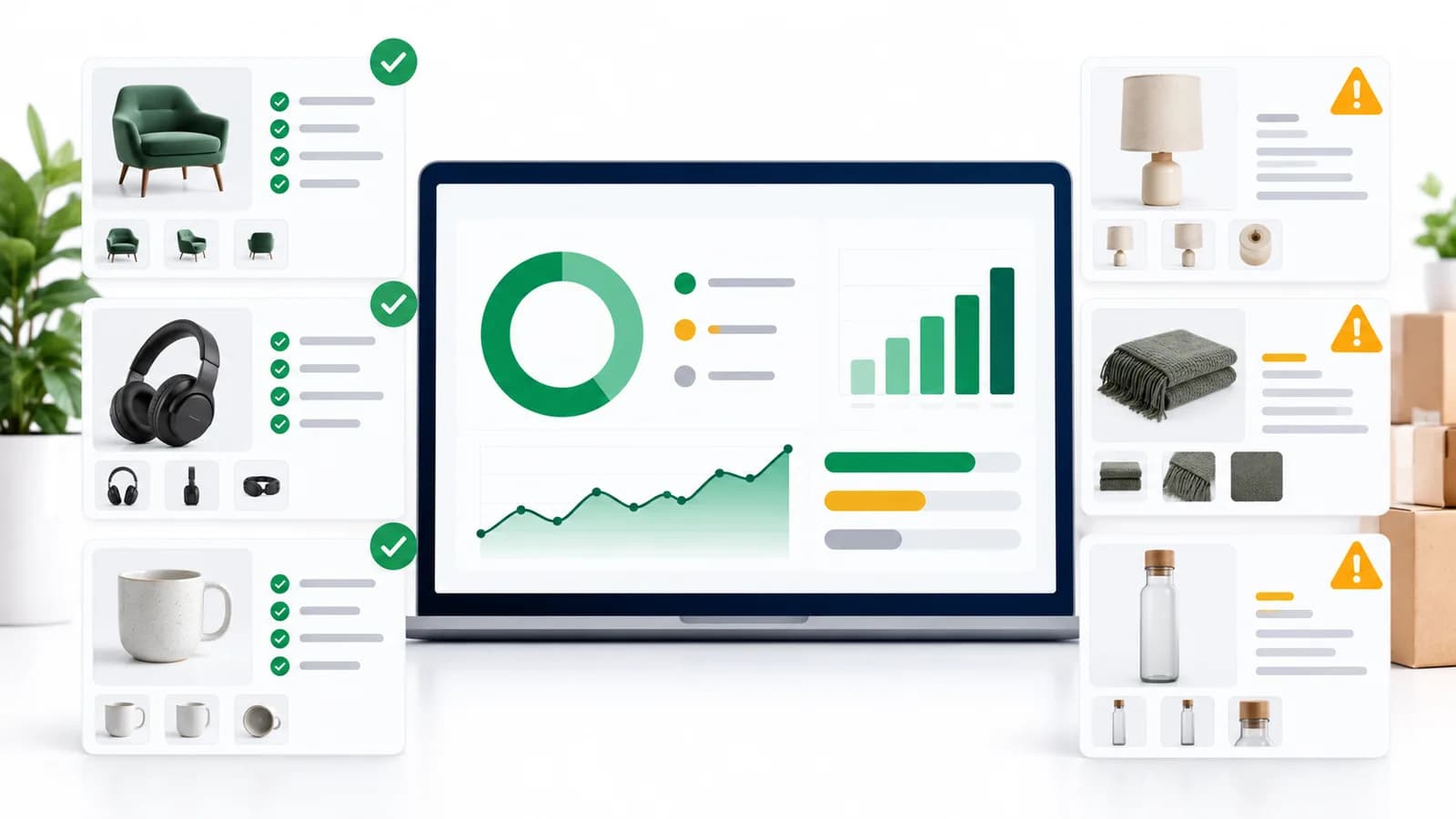
Shopify gives merchants a practical product structure, but fast-growing catalogs often outgrow ad hoc collections and free-text tags. A clear taxonomy helps shoppers browse, improves filters and search, and gives teams a consistent way to publish products across Shopify and other channels.
Separate four layers of product organization
A reliable Shopify model keeps different jobs separate:
- Product category: the primary product type used for classification and downstream rules.
- Collections: curated or rule-based merchandising groups such as “new arrivals” or “waterproof jackets”.
- Attributes: reusable buying facts such as size, material, colour, compatibility, or capacity.
- Metafields: structured fields for additional business or channel data that does not belong in a title or description.
Do not use tags as a replacement for every layer. Tags are flexible, but uncontrolled tags become difficult to filter, translate, validate, and maintain.
Design the internal taxonomy first
Start with the buying structure in your business, then map it to Shopify. A good taxonomy describes what the product is before it describes how you want to promote it. For example, “Furniture > Seating > Dining Chairs” is a product structure; “Summer Sale” is a campaign collection.
The category mapping guide explains how to keep a controlled internal taxonomy while maintaining channel-specific mappings.
Use attributes for decisions shoppers make
Choose attributes by category. A chair may need width, height, material, finish, room, and assembly. A camera may need sensor size, mount, resolution, and compatibility. The attribute set should answer the comparison questions that stop shoppers from buying.
Use controlled values where filtering matters. “Dark green”, “forest”, and “green” may be useful editorial variations, but the filter system needs one canonical value with optional display labels. Keep units consistent and store the raw supplier value when traceability is important.
Model variants carefully
Variants represent purchasable options such as size, colour, or pack quantity. Do not create a variant for a marketing message or a specification that does not change the purchasable item. Product-level attributes apply to every variant; variant-level attributes describe what changes at checkout.
Before importing, define how SKU, barcode, inventory, price, images, and option names map to your source system. Test a product family with multiple options, missing values, and an image per variant.
Use metafields for structured extension
Metafields are useful for product specifications, care instructions, compliance references, warranty information, technical documents, and related products. Give each metafield a clear owner, data type, validation rule, and purpose. A metafield that only stores a paragraph copied from a supplier PDF may add complexity without improving discovery.
Build collection rules that remain stable
Use collections for merchandising and navigation, but base automated rules on controlled category and attribute values. Avoid building critical navigation on fragile title text or inconsistent tags. When a rule changes, test the collection size, empty states, canonical links, and breadcrumb behavior.
Validate feeds and search after changes
Taxonomy changes can affect Google Shopping category mappings, product feeds, filters, and analytics. Run a representative export after every structural change. The Google Shopping Feed Generator can help create a channel-ready feed, while the product attributes guide covers filter design.
For large catalogs, keep the source taxonomy outside the storefront and publish approved values into Shopify. This makes governance, supplier normalization, and multi-channel reuse much easier.
Commercial readiness checklist
Before you scale the model, confirm that your team can import supplier data, approve changes, identify incomplete products, and publish the same product truth to every channel. If those steps are still manual, review the PIM Readiness Score to see where a managed product workflow would create the most leverage.