Furniture and mattresses are both named in the Commission’s ESPR working plan, but on different timelines and with different levels of certainty. Furniture has an indicative delegated act date later in the decade; mattresses are named as a priority without a firm date yet. This guide covers where each stands, the data a furniture passport is likely to need, and why this category’s operational realities, modular assemblies, heavy logistics, long-tail supplier networks, make it harder to prepare for than the timeline alone suggests.
Where furniture and mattresses stand
The Ecodesign for Sustainable Products Regulation (ESPR), Regulation (EU) 2024/1781, works product group by product group. The Commission’s first ESPR working plan, adopted 16 April 2025, names furniture with a delegated act expected around 2028, later than iron and steel, aluminium, textiles and tyres. Mattresses are named as a priority product group in the same plan, but their timing has not been confirmed. Both dates are the plan’s current targets, not guarantees, and the DPP Product Category Lookup tracks the current status with sources.
The data a furniture passport is likely to need
| Data | What it covers |
|---|---|
| Material and component composition | Per component, not just the finished piece: frame, upholstery, foam, coatings and adhesives |
| Durability | Test method and result for structural and material durability claims |
| Repairability and spare parts | Availability and lead time for replacement parts, and disassembly instructions |
| Dimensions and configuration | Assembled and packed dimensions, and configuration logic for modular pieces |
| Recyclability and end of life | Separable materials, recycling instructions, and take-back options where offered |
| Substances of concern | Presence and concentration in finishes, foams and treated materials |
This follows the direction of the Annex I parameters described in the ESPR Annex I guide . The exact field list depends on the delegated act, which has not been adopted, so this is a reasonable starting point rather than a confirmed requirement.
Why furniture is operationally harder than its timeline suggests
- Component-level material diversity. A single piece can combine wood, metal, foam, textile and adhesive components, each with its own composition and substance profile.
- Modular and configurable products. Sofas, shelving and storage systems sold as configurable modules need data that reflects the combination sold, not just a single base SKU.
- Supplier diversity and inconsistent formats. Furniture supply chains often combine large manufacturers with smaller specialist component suppliers, each reporting data differently.
- Repair and replacement parts over a long product life. Furniture is expected to last years, so spare-parts availability and repair guidance need to stay synchronised with product revisions long after launch.
- Heavy, bulky logistics. Dimensions and packaging data matter more here than in most categories, both for compliance and for practical fulfilment reasons.
Where to start
- Record materials and finishes per component, not per finished product, since that is the level most future requirements are likely to need.
- Standardise supplier evidence templates across your component suppliers now, before volume grows; see how to collect supplier data for DPP readiness .
- Capture repair and spare-parts information for best sellers first, where the data will be reused longest.
- Define handling rules for modular assemblies so configured products inherit the right combination of component data.
- Track both furniture and mattresses separately in your regulatory watch, since their timing differs even though both are named priorities.
For the full sequence from scope to publication, see the 30-step ESPR compliance roadmap , and for how furniture compares with other priority groups, which products need a Digital Product Passport, by product group .
Frequently asked questions
When will furniture need a Digital Product Passport?
Furniture is a priority group in the Commission’s ESPR working plan, with a delegated act expected around 2028. This timing is the plan’s current target and can change.
Are mattresses on the same timeline as furniture?
Mattresses are named as a priority product group in the same working plan, but their specific timing has not been confirmed, so they should be tracked separately from furniture.
What data should furniture brands collect now?
Material and component composition, durability test results, repairability and spare-parts information, dimensions and configuration data, recyclability and end-of-life instructions, and substances of concern.
Why is furniture harder to prepare for than the timeline suggests?
Component-level material diversity, modular and configurable products, varied supplier formats, and long product lifespans requiring synchronized repair data all add operational complexity beyond what the delegated-act date alone implies.
Should furniture data be recorded per product or per component?
Per component. A single piece can combine wood, metal, foam, textile and adhesive elements, each with its own composition and substance profile, and most likely future requirements will need that level of detail.
Where can I check the current status of furniture and mattresses under the ESPR?
The DPP Product Category Lookup tracks the status, expected timing and sources for both groups separately, updated as the Commission’s working plan changes.

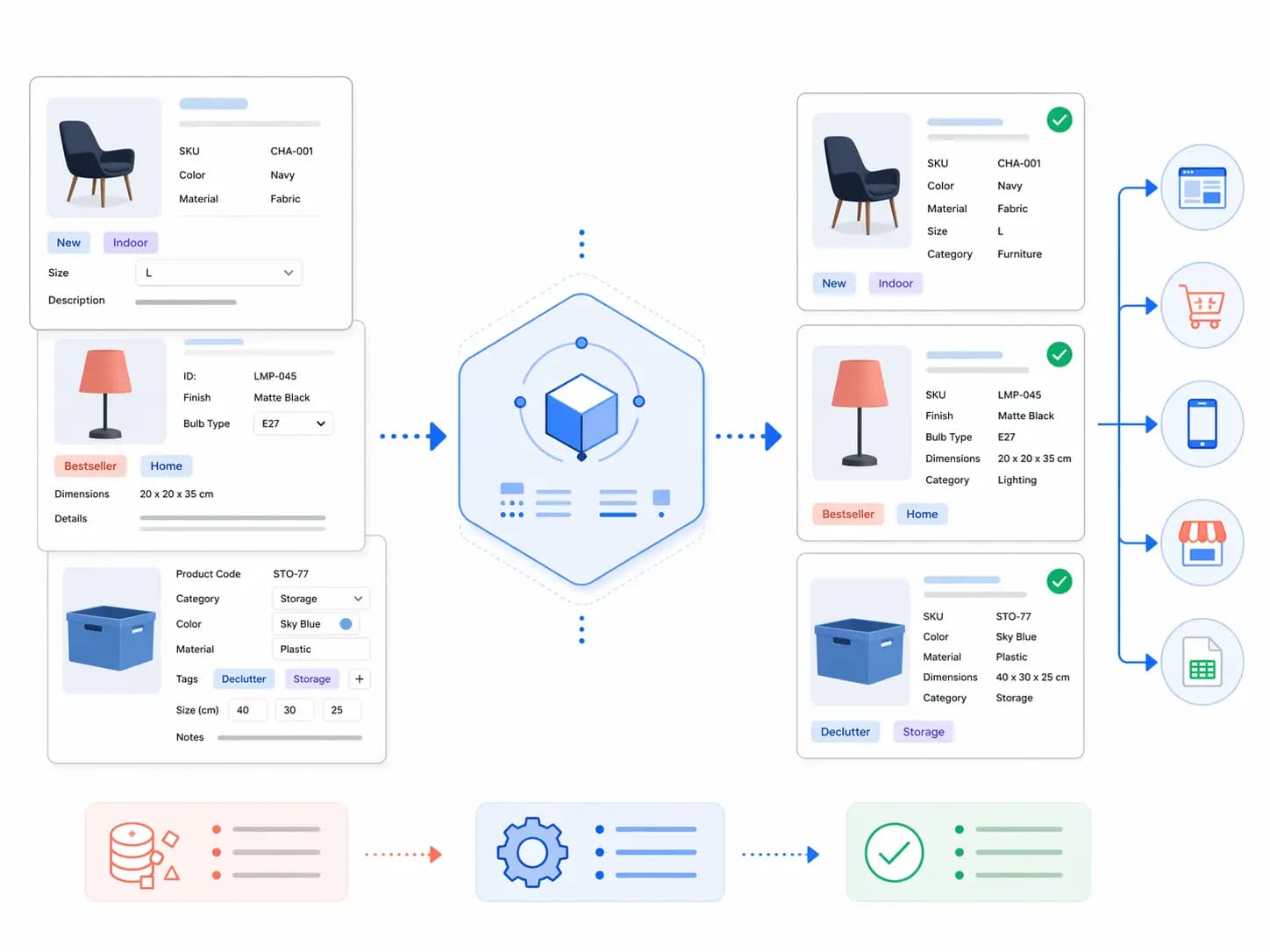
Digital Product Passport data workflow connecting products, materials, suppliers and compliance