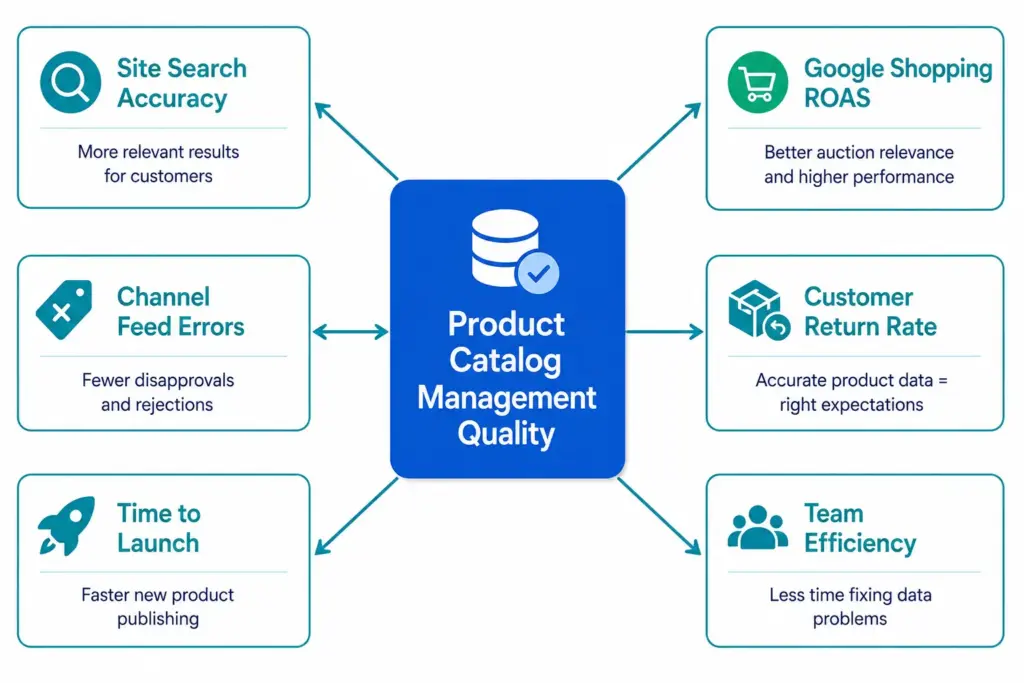
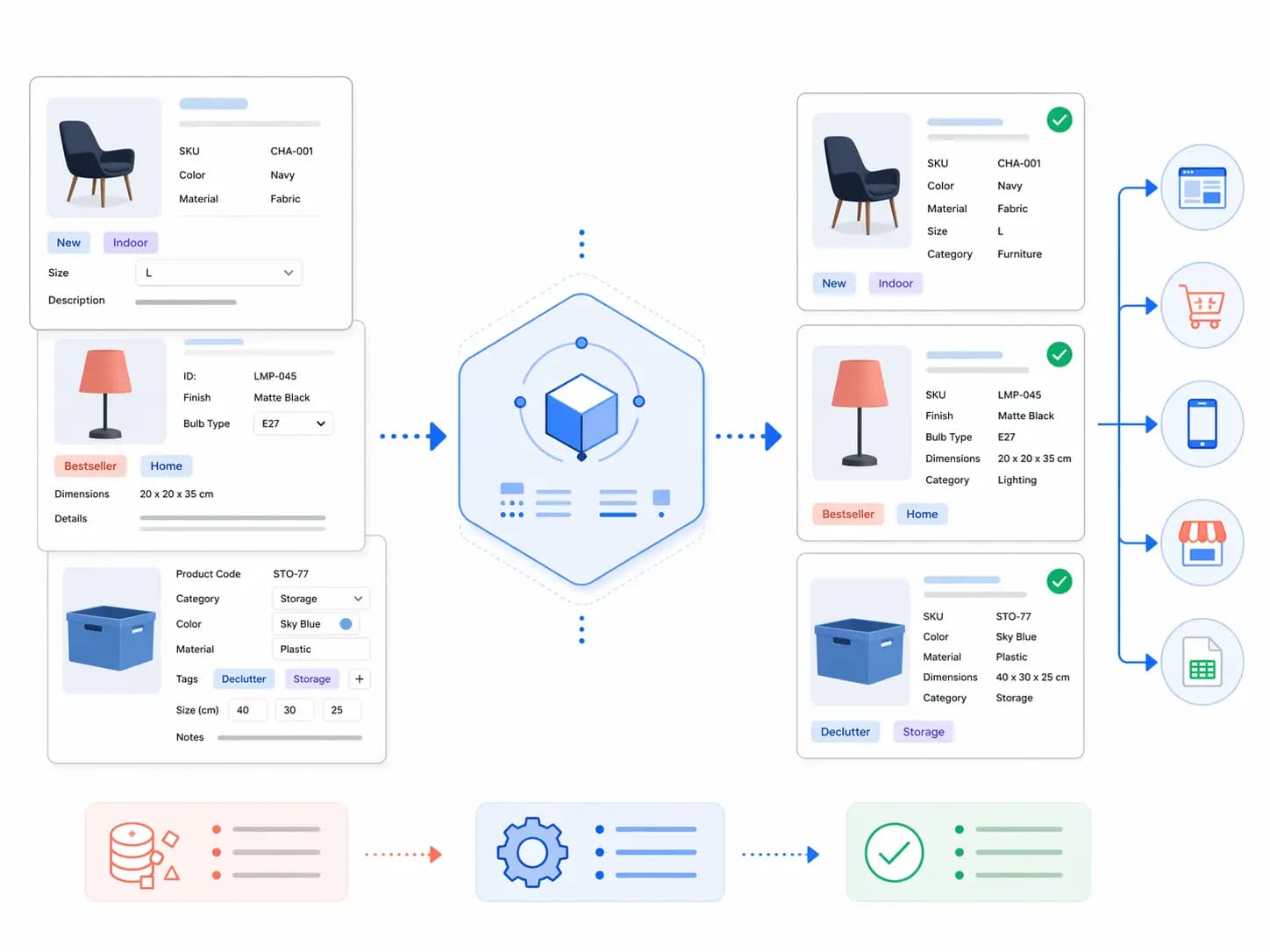
Product catalog management is how ecommerce businesses organise, maintain, and distribute their product data. It sounds operational — because it is. But it is also one of the highest-leverage functions in ecommerce growth, because product data quality directly determines how well products perform in search, on channels, and with customers.
This guide covers what catalog management is, what it involves, why it matters at scale, and how to approach it without enterprise software or a large team.
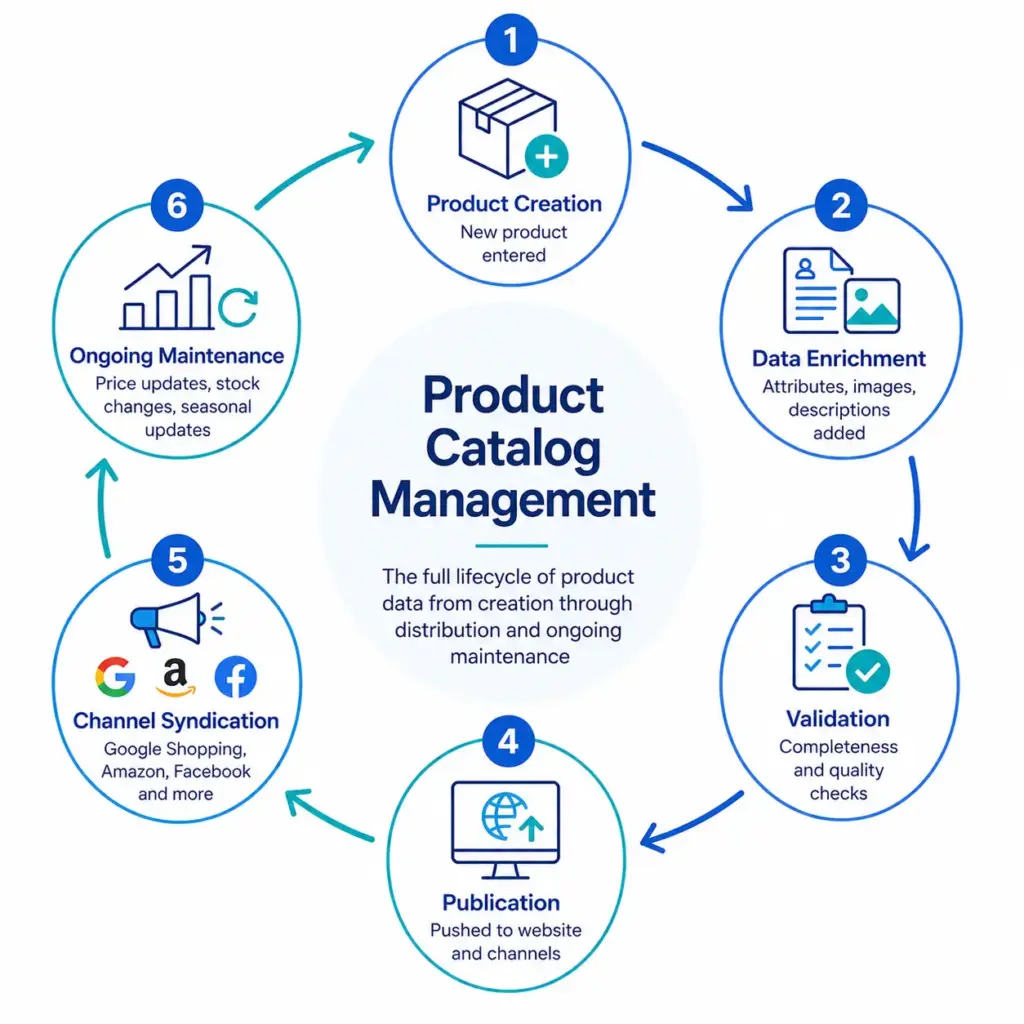
What Product Catalog Management Covers
Product catalog management encompasses every activity involved in making product data accurate, complete, and available where it needs to be. In practice, this means:
Product data creation and onboarding
Creating new product records when products are added to the catalog — entering base data (SKU, name, description, price), assigning taxonomy categories, and populating attribute fields. For businesses with many suppliers, this includes receiving, cleaning, and transforming supplier-provided data into your catalog’s format.
Taxonomy and category management
Building and maintaining the category structure that organises your catalog — defining hierarchies, attribute sets per category, and the rules that determine where products belong. This is the structural foundation everything else is built on. See What Is Product Taxonomy for the full overview.
Content enrichment
Adding and improving the content that makes products sell — writing product descriptions, capturing or sourcing product images, adding marketing copy, and ensuring completeness of attributes that drive search and filter performance.
Data quality management
Monitoring and maintaining the accuracy and completeness of product data over time — fixing errors, normalising inconsistent attribute values, validating GTINs and product identifiers, and auditing for missing required data. This is ongoing, not a one-time project.
Channel syndication
Distributing product data to every channel where products are sold or marketed — website, Google Shopping, Amazon, Facebook Catalogue, wholesale buyers, print catalogs. Each channel has different format requirements, and catalog management includes managing those transformations without duplicating manual work.
Variant management
Managing the relationship between parent products and their variants (sizes, colours, materials) — ensuring each variant has correct identifiers, images, pricing, and stock information while maintaining the link to the parent product for shopping feed purposes (item_group_id).