Catalog
Variants and bundles
Manage SKU-specific records and bundled product relationships.
For workspace users and administrators · Updated October 1, 2026
What this module is for
Manage SKU-specific records and bundled product relationships.
Use this page when you need to complete the task yourself and understand what each action changes. The steps name the relevant screen, explain why the action belongs in the workflow, and state what to verify before moving on.
Before you start
- Sign in with a role that can view or change the records in this guide.
- Have the product, file, channel, or workspace information ready before starting an action that saves data.
- Use a small test record or file first when an action affects multiple products or a connected channel.
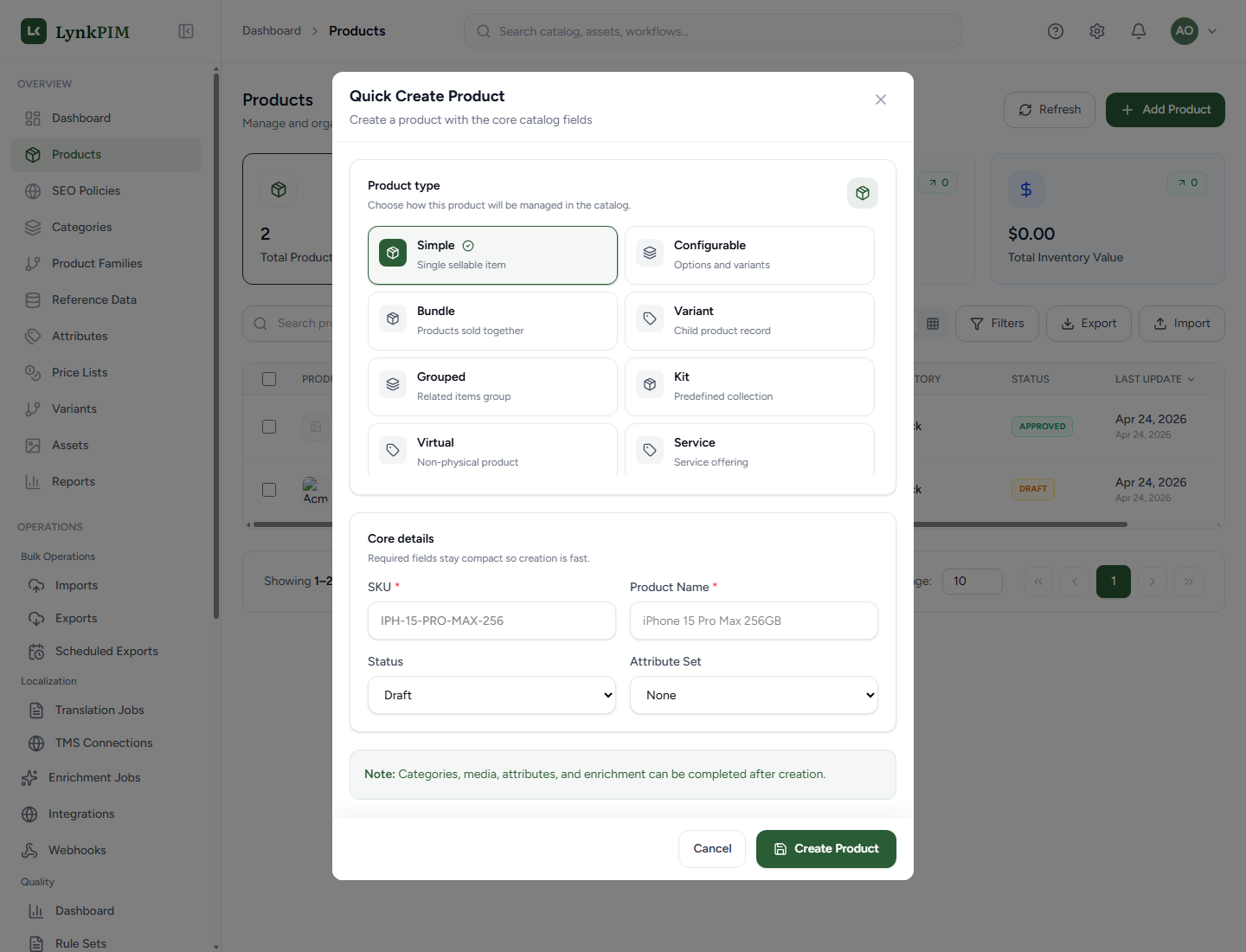
1. Create variants
Complete these actions in order. They describe the screen to use, the decision to make, and the evidence to check before you move to the next stage.
-
Step 1.1
Do this: Open a parent product and select the Variants tab, or open the global Variants list.
Why this matters: This keeps the create variants work traceable and makes the next review, validation, or handoff easier to complete.
Check before continuing: Confirm that the named screen or panel is visible and contains the expected values. If a control is missing, check your workspace role before continuing.
-
Step 1.2
Do this: Add each distinct sellable combination with its own SKU and variant-specific attribute values.
Why this matters: This keeps the create variants work traceable and makes the next review, validation, or handoff easier to complete.
Check before continuing: Look for a confirmation message, a newly created record, or a job status entry. If nothing changes, read the inline field error or job detail before retrying.
-
Step 1.3
Do this: Save and check that the parent and variant records remain linked.
Why this matters: This keeps the create variants work traceable and makes the next review, validation, or handoff easier to complete.
Check before continuing: Look for a confirmation message, a newly created record, or a job status entry. If nothing changes, read the inline field error or job detail before retrying.
2. Review bundles
Complete these actions in order. They describe the screen to use, the decision to make, and the evidence to check before you move to the next stage.
-
Step 2.1
Do this: Open the product’s Bundles tab and select component products or variants.
Why this matters: This keeps the review bundles work traceable and makes the next review, validation, or handoff easier to complete.
Check before continuing: Confirm that the named screen or panel is visible and contains the expected values. If a control is missing, check your workspace role before continuing.
-
Step 2.2
Do this: Check the component relationship and quantities before using the bundle in a channel.
Why this matters: This keeps the review bundles work traceable and makes the next review, validation, or handoff easier to complete.
Check before continuing: Confirm that the named screen or panel is visible and contains the expected values. If a control is missing, check your workspace role before continuing.
-
Step 2.3
Do this: Revisit the bundle after a component changes to confirm its exported data remains correct.
Why this matters: This keeps the review bundles work traceable and makes the next review, validation, or handoff easier to complete.
Check before continuing: Confirm that the named screen or panel is visible and contains the expected values. If a control is missing, check your workspace role before continuing.
Events and statuses to watch
Actions such as saving, importing, exporting, connecting, publishing, and approving can either update a record immediately or create background work. Wait for the on-screen confirmation and then check the relevant list, detail view, or job status before repeating an action.
- Saved or created: confirm the record appears with the intended values.
- Queued, running, or processing: wait for completion and open the job or event detail if progress stops.
- Failed, partial, rejected, or blocked: read the specific message, correct the source data or permissions, then retry only the affected work.