The Ecodesign for Sustainable Products Regulation (ESPR), Regulation (EU) 2024/1781, does not hand you a single list of fields to fill in. It sets a framework: Annex I lists the product parameters that ecodesign requirements can cover, and each delegated act then picks the parameters that apply to one product group and sets what the Digital Product Passport must contain. For a product team the practical question is what data each parameter points to, who holds it, and how much of it exists today. This guide walks through the Annex I parameters in plain English, translates them into data fields and owners, and shows how to find your gaps with the free DPP Data Field Mapper .
How Annex I, delegated acts and the passport fit together
Three layers matter, and mixing them up is the most common source of confusion:
The wider picture across ESPR, the Battery Regulation and the consumer and repair rules is in how the EU product rules fit together .
- The ESPR framework defines the parameters (Annex I), the passport concept and the general duties of manufacturers, importers and distributors.
- A delegated act per product group chooses which parameters apply, sets performance thresholds and information requirements, and defines what the passport carries for that group. Textiles, iron and steel, furniture and others each get their own.
- Your product data has to supply the values, with evidence, in a structured, machine-readable form that can be reached through a data carrier on the product.
Because the delegated acts define what is binding, no generic list can be a legal checklist. What you can do now is build the data foundations that nearly every act will need. To check the status of your own product group, use the DPP Product Category Lookup , and for the wider picture read the Digital Product Passport guide .
The Annex I product parameters and the data behind them
Annex I groups the parameters that ecodesign requirements can address. The table summarises each one in plain English, with the data it usually points to and the teams that typically hold it. Wording is simplified, so check the regulation text and your delegated act for the exact terms.
| Parameter | What it means | Typical data | Usual owners |
|---|---|---|---|
| Durability and reliability | How long the product works under normal use, and how likely it is to fail. | Expected lifetime, test method and result, cycle counts, failure-rate indicators, warranty length and terms | R&D, quality |
| Reusability | Whether the product or its parts can be used again by another owner or in another product. | Reuse instructions, standard interfaces, resale or take-back options | Product, operations |
| Upgradability, reparability, maintenance and refurbishment | How easily the product can be improved, fixed, serviced and restored. | Disassembly steps and tools, spare parts list, availability period and lead time, repair manuals, software update period | R&D, after-sales |
| Presence of substances that inhibit circularity | Substances that make recycling or reuse harder, or that are of concern for health or the environment. | Substance name, location in the product, concentration, regulatory list reference such as REACH candidate list | Sustainability, suppliers |
| Energy use or efficiency | How much energy the product uses in operation. | Rated power, annual consumption, efficiency class, energy label data | R&D |
| Resource use or efficiency | How much material and water the product uses over its life. | Material intensity, water use, resource indicators from a life-cycle assessment | Sustainability |
| Recycled content | The share of recycled material in the product. | Recycled share by material, source, verification or certificate | Procurement |
| Remanufacturing and recycling | Whether the product can be rebuilt or recycled at end of life. | Recyclability by component, recycling instructions, separable parts, material coding | R&D, sustainability |
| Recovery of materials | How much of the product’s material can be recovered. | Recoverable material shares, critical raw materials present and where | Sustainability |
| Environmental impacts, including carbon and environmental footprint | The climate and wider environmental impact across the life cycle. | Carbon footprint value and method, environmental footprint indicators, system boundary | Sustainability |
| Expected generation of waste | How much waste the product creates when made and when discarded. | Manufacturing waste, packaging waste, end-of-life waste estimates | Sustainability, operations |
From parameters to a working data model: eight domains
Parameters describe the regulation’s view of a product. A data model has to describe your view, the attributes in your systems. Grouping fields into eight domains makes the mapping manageable, and it is the structure used by the mapper tool.
| Domain | Typical fields |
|---|---|
| Identification | Unique product, operator and facility identifiers; GTIN and model; product category and customs code |
| Documentation | User manuals, declaration of conformity, safety information, technical file reference |
| Materials and substances | Material composition, substances of concern, recycled content, critical raw materials |
| Durability and reliability | Expected lifetime, reliability indicators, warranty |
| Repair, reuse and upgrade | Repairability, spare parts, repair instructions, software updates, upgradability |
| Environmental footprint | Energy use, carbon footprint, wider environmental footprint, resource use |
| Circularity and end of life | Recyclability, disassembly, take-back, remanufacturing, waste |
| Supply chain | Supplier and site map, raw material origin, due diligence |
A few points about the model:
- Identification comes first. Every passport is tied to a unique identifier, and the unique product, operator and facility identifiers are expected to follow the ISO/IEC 15459 series or an equivalent. Decide how your GTIN, model number and unique identifier relate before you build anything else.
- Documentation is not data. Manuals, declarations and test reports are files. The passport holds structured fields and links to the evidence, so store both and connect them.
- Some fields are yours, some are your suppliers’. Material composition, substances and origin usually start at suppliers, which is why supplier data collection is the longest step. See how to collect supplier data for DPP readiness .
What most teams already have and what they lack
Teams that run the mapper for the first time usually find the same pattern:
| Usually in place | Often partial | Usually missing |
|---|---|---|
| GTIN, model, product category | Material composition at product level | Substances of concern by component |
| User manuals and declarations of conformity | Warranty terms, spare parts lists | Carbon footprint with a stated method |
| Manufacturer and importer details | Recycled content claims | Disassembly and end-of-life instructions |
| Basic care and safety information | Repair instructions for best sellers | Facility and supplier identifiers |
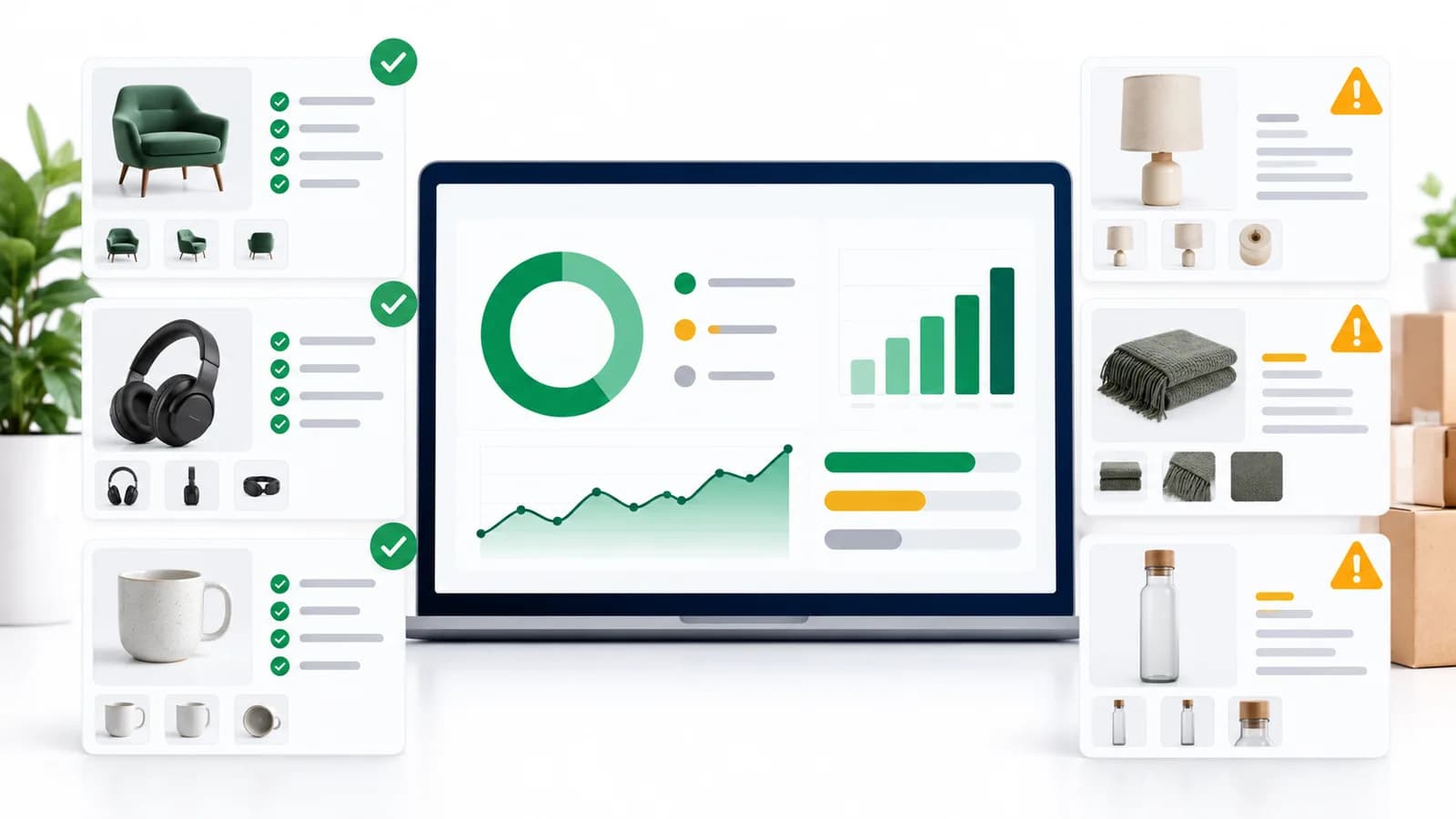
The gaps cluster in sustainability and supply chain data, which are owned outside the product team. That is a governance problem before it is a technology problem.
How the priority groups change the emphasis
- Textiles and apparel. Expect fibre composition, recycled content, durability, care and repair information and substance data at style or colour level. Textiles are a priority group in the Commission’s ESPR working plan, with a delegated act expected around 2027. The timing is not final.
- Iron, steel and aluminium. Carbon footprint, recycled content and grade or alloy data matter most. Iron and steel come first in the working plan.
- Furniture and mattresses. Materials, durability, repairability and end-of-life data, with acts expected later in the decade.
- Electronics. Repairability, spare parts and software updates already appear in other ecodesign rules, so this data is often the most mature.
- Batteries. These fall under the Battery Regulation (EU) 2023/1542 rather than the ESPR, with a battery passport from 18 February 2027 for electric vehicle, industrial (over 2 kWh) and light means of transport batteries.
The category lookup shows the status and source for each of these. Dates marked expected come from the Commission’s working plan and can change.
For the full status of each product group and what applies today, read which products need a Digital Product Passport, by product group .
Five steps to start
For the full sequence, see the ESPR compliance roadmap: 30 steps for product teams .
- Name the product groups you sell. Only their delegated acts will bind you, so start with the groups that come first.
- Map current fields to the eight domains. Use the DPP Data Field Mapper to mark what you have, partly have or lack, and to get a ranked list of gaps with suggested owners.
- Fix identifiers and structure first. Unique identifiers, units and value lists are cheap to standardise and expensive to retrofit. The guide to building a DPP data model explains the approach.
- Start supplier requests for the slow data. Composition, substances and origin take months. Send one clear template with definitions and accepted evidence.
- Turn the gaps into a plan. Put owners and dates against each one in the ESPR Compliance Roadmap , and score your overall position with the DPP Readiness Assessment .
Data quality rules that save rework
- One unit per field. Store grams or kilograms, never a mix, and record the unit explicitly.
- Controlled value lists. Materials, substance names and countries come from lists, not free text. The same discipline applies to product attributes generally, as described in the guide to DPP-ready product data .
- Evidence beside the value. Keep the certificate, test report and date next to every claim, so the value can be defended.
- Versioning. Record who changed a value and when. Passports must stay accurate as products and rules change.
- A single source of truth. The passport should draw from governed master data, not from a one-off spreadsheet. See what a single source of truth means in product operations .
For the enterprise view of the whole programme, read the Digital Product Passport guide , and for the field-level detail, what data fields should go into a Digital Product Passport . The DPP Terminology Glossary defines every term used here.
Data also has to be reachable from the product. See DPP data carriers compared: QR code, Data Matrix, NFC and RFID .
Frequently asked questions
What is ESPR Annex I?
Annex I of the Ecodesign for Sustainable Products Regulation, Regulation (EU) 2024/1781, lists the product parameters that ecodesign requirements can address, such as durability, reparability, recycled content and environmental footprint. Delegated acts choose which apply to each product group.
Is the Annex I list the same as the Digital Product Passport data list?
No. Annex I defines the parameters that requirements can cover. The delegated act for each product group defines what the passport must contain for that group, so the exact fields differ by product.
What data does a Digital Product Passport usually need?
Identification, documentation, material composition and substances of concern, durability and repair data, environmental footprint, and end-of-life information, plus supply chain details where required. The eight-domain model groups these.
Who in the company owns Digital Product Passport data?
Several teams. Product and R&D hold identification, documentation and repair data, sustainability holds footprint and substance data, procurement and suppliers hold composition and origin, and legal holds conformity documents. Assign an owner to every field.
Can I prepare before my product group’s delegated act is adopted?
Yes. Standardise identifiers, structure your material and substance data, collect supplier evidence and set up governance. Nearly every delegated act will need this groundwork.
Do batteries follow the ESPR?
Batteries are governed by the Battery Regulation (EU) 2023/1542, which has its own battery passport from 18 February 2027 for electric vehicle, industrial (over 2 kWh) and light means of transport batteries.

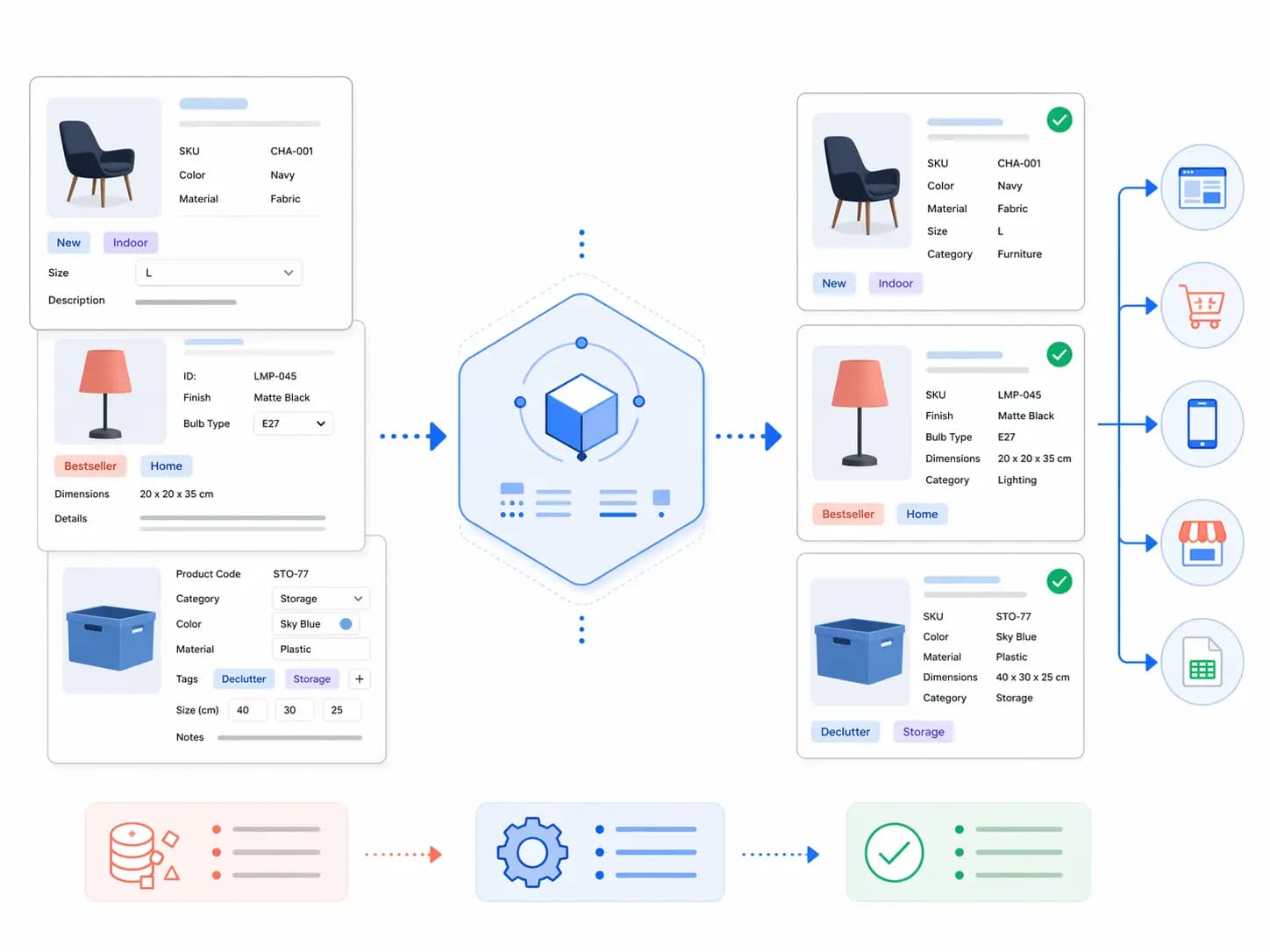
Digital Product Passport data workflow connecting products, materials, suppliers and compliance